Build Smarter Mobile Apps With AI
Turn AI into a useful product capability — not a buzzword. We design and develop intelligent mobile applications that combine great UX, reliable software engineering, AI models, business data, APIs, automation, and secure production infrastructure.
Discuss Your AI App Request an AI App Proposal
AI Should Solve a Business Problem, Not Create a New One
Many organizations want AI in their products but are unsure which use cases are valuable, which data can be used, how model costs should be controlled, or how AI should behave when it is uncertain.
- 01 Unclear AI use cases
- 02 Unreliable outputs
- 03 Poor user experience
- 04 Data privacy concerns
- 05 High inference costs
- 06 Complex integrations
- 07 Weak evaluation
- 08 Hallucinations
- 09 Vendor dependency
- 10 Difficult production monitoring
Combine AI Intelligence With Product Engineering
From AI Strategy to Production Mobile App
AI Product Discovery
Identify high-value AI use cases, users, data requirements, constraints, risks, and measurable success criteria.
Generative AI Apps
Build applications around conversational AI, content generation, summarization, extraction, classification, and intelligent workflows.
AI Assistants & Copilots
Create assistants that help users find information, complete tasks, understand data, or navigate complex workflows.
RAG Applications
Connect AI experiences to approved business knowledge and documents using retrieval-based architectures.
AI Recommendations
Deliver personalized suggestions, content discovery, product recommendations, or next-best actions where sufficient data and business logic exist.
Computer Vision
Use image understanding for appropriate inspection, classification, recognition, scanning, or document workflows.
Voice & Conversational Apps
Add speech input, transcription, voice interfaces, and conversational workflows where they improve usability.
Intelligent Automation
Combine AI with APIs and business rules to automate repetitive tasks while maintaining human review where necessary.
AI Integration
Add AI capabilities to existing mobile applications, SaaS platforms, websites, and business systems.
AI App Maintenance
Monitor quality, model behavior, costs, dependencies, prompts, retrieval, security, and evolving AI requirements.
Practical AI Use Cases for Mobile Applications
Customer Support
AI assistants, knowledge search, response suggestions, ticket classification, and escalation workflows.
Document Intelligence
Extract, summarize, classify, validate, and route information from supported documents.
Personalization
Recommend products, content, services, or actions based on appropriate signals.
Search
Natural-language search, semantic discovery, question answering, and knowledge retrieval.
Sales
Lead qualification, sales assistance, summaries, recommendations, and follow-up support.
Healthcare
Appropriate decision-support, documentation, patient-service, and administrative use cases subject to applicable safety, privacy, and regulatory requirements.
Education
Personalized learning assistance, content support, assessment assistance, and knowledge discovery.
Operations
Workflow assistance, anomaly detection, classification, forecasting support, and intelligent task routing.
Finance & Business
Document analysis, knowledge assistants, reporting support, classification, and workflow automation subject to appropriate controls.
Choose the Right AI Approach for the Product
Not every AI problem requires a large language model, and not every application needs a custom-trained model.
Our technology principle: select the simplest reliable approach that meets the required quality, latency, privacy, cost, scalability, and maintainability targets.
Build Useful Generative AI Experiences
Generative AI can support conversational interfaces, summarization, content generation, extraction, classification, reasoning assistance, and knowledge experiences.
- Chat interfaces
- Structured output
- Summarization
- Classification
- Extraction
- Rewriting
- Question answering
- Tool calling
- Function execution
- Multi-step workflows
Connect AI to Your Business Knowledge
- Ingestion
- Chunking
- Embeddings
- Vector search
- Metadata filtering
- Retrieval
- Prompt construction
- Citations
- Evaluation
- Access control
Sources we can connect
Security principle
Retrieval must respect user permissions and data boundaries — not every user should be able to retrieve every document.
Design AI Experiences People Can Understand and Trust
- Conversational interfaces
- Suggested actions
- Streaming responses
- Loading & progress states
- Source references
- Uncertainty cues where meaningful
- Edit & regenerate
- Feedback capture
- Human handoff
- Error recovery
Build the AI Experience Into a Production-Ready App
Build AI With Security and Responsible Data Handling
Data classification & consent
Establish what each category of data is, and where consent applies before it reaches a model.
Access control & encryption
Permissions, encryption in transit and at rest, and secure secret handling.
Prompt injection defenses
Treat retrieved and user-supplied content as untrusted input, not as instructions.
Output validation & filtering
Validate structured results and filter sensitive data before it reaches the user.
Audit logging
Record what was asked, retrieved and returned where the workflow and regulations require it.
Provider policies & retention
Check model/provider terms and set retention controls to match your obligations.
Test AI Behavior, Not Just App Functionality
Traditional software tests are necessary but insufficient for AI-enabled features. AI outputs can vary, so quality must be evaluated against representative scenarios and expected behavior.
- Create representative test datasets
- Define acceptance thresholds
- Measure model behavior
- Compare changes
- Monitor production continuously
Balance AI Quality, Speed, and Operating Cost
- Model selection
- Prompt efficiency
- Context reduction
- Retrieval optimization
- Caching
- Request batching where appropriate
- Token control
- Streaming
- Rate limits
- Fallback models
Measure What the AI Feature Is Actually Delivering
Test the Complete AI Product Experience
Application testing
Unit, UI, integration, API, regression, device, OS, network, performance, security, and accessibility testing.
AI testing
Prompt tests, retrieval tests, grounding tests, adversarial tests, safety tests, structured-output validation, hallucination checks, regression evaluation, and human review for high-impact workflows.
Critical journeys
Login, AI request, retrieval, tool/action execution, error handling, human escalation, feedback, data permissions, and subscription/usage limits.
From AI Idea to Production Product
Discover
Identify the user problem, business goal, AI opportunity, constraints, and measurable outcome.
Validate
Determine whether AI is actually the right solution, comparing AI, automation, rules, and conventional software approaches.
Define
Specify user journeys, AI behaviors, data sources, integrations, acceptance criteria, and MVP scope.
Design
Create mobile UX, AI interaction patterns, feedback mechanisms, error states, and human-review flows.
Architect
Define mobile, backend, AI model, retrieval, data, security, monitoring, and deployment architecture.
Prototype
Validate the highest-risk AI assumptions with representative data and realistic user flows.
Build
Develop mobile features, backend services, AI integration, data pipelines, business logic, and analytics.
Evaluate
Test AI quality, security, reliability, performance, cost, and user experience against defined thresholds.
Launch
Deploy backend and mobile builds, configure model providers, environments, secrets, rate limits, monitoring, analytics, and App Store/Google Play releases — starting with controlled exposure where appropriate.
Improve
Continuously refine prompts, retrieval, models, workflows, UX, and business rules based on evidence.
Add AI to an Existing Mobile Application
We Combine AI Strategy With Real Product Engineering
AI features only create value when they work reliably inside a complete product experience. We help move AI from experimentation into useful, maintainable product capabilities.
Discuss Your AI AppApps We've Built for Real Business Outcomes

Healthcare Platform
A medical platform website with online booking, an admin panel and patient self-service — plus a companion booking and admin experience for the app side. Real, shippable proof of work built by our team.

Clinic Booking App
Login and onboarding design for a clinic appointment booking app.
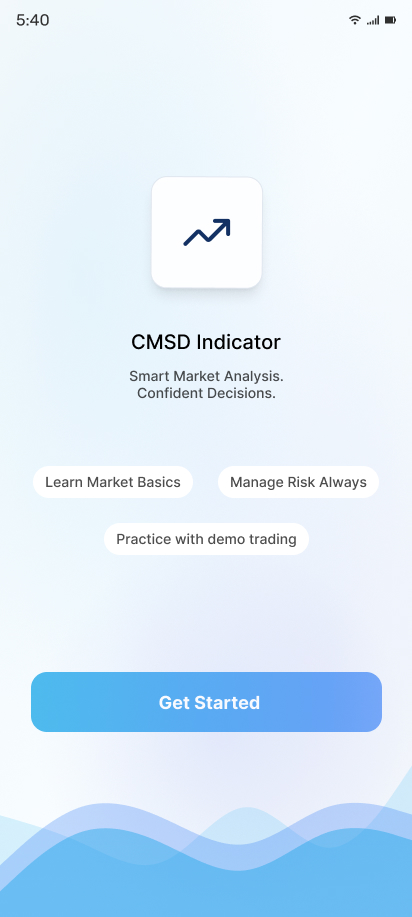
Market Analysis App
Onboarding design for a market analysis and trading indicator app.
What Our
Clients Say
Highest rated with an average 4.92 out of 5.00 from 13 reviews
"We received exceptional service for our website redesign and digital marketing campaign. The team's professionalism, technical expertise, and commitment to quality exceeded our expectations."
"Their web development expertise is impressive. The project was completed on schedule, and the after-sales support has been outstanding. We look forward to working with them again."
"The app development team was professional and supportive. They understood our business needs and delivered a reliable application with all the required features."
"Their digital marketing strategies helped us increase our online inquiries significantly. The team was knowledgeable, responsive, and transparent throughout the campaign."
"Their website development team built a fast, secure, and mobile-friendly website for our clinic. We have received many positive comments from our patients."
"Excellent service from start to finish. Their digital marketing efforts improved our search rankings and generated quality business leads within a few months."
AI App Development for Different Product Stages
AI Discovery
Use-case identification, feasibility, architecture direction, data assessment, risk analysis, and roadmap.
AI MVP
A focused AI feature with mobile UX, backend integration, evaluation, analytics, testing, and launch.
Full AI App
Product discovery, UX/UI, mobile application, backend, AI capabilities, integrations, testing, deployment, and support.
AI Modernization
Add intelligent features to an existing app, or improve an existing AI implementation.
Ongoing AI Engineering
Model/provider changes, prompt and retrieval improvements, monitoring, cost optimization, new features, and maintenance.