Build a Custom App Around Your Business
Turn your business idea, workflow, or product concept into a secure, scalable mobile application designed for your users and built around the way your business actually works.
Discuss Your App Idea Request an App Development Proposal
Your Business Is Unique. Your App Should Be Too.
Off-the-shelf applications solve common problems well. They become restrictive the moment your workflows, customer journeys, integrations, reporting, permissions, or growth requirements stop being common.
- 01 Limited customization
- 02 Manual processes
- 03 Disconnected systems
- 04 Poor user experience
- 05 Duplicate data entry
- 06 Weak reporting
- 07 Difficult integrations
- 08 Scalability limits
- 09 High operational effort
A Mobile Product Designed Around Your Business Goals
End-to-End Custom Mobile App Development
Custom Business Apps
Digitize internal workflows, field operations, sales, service, approvals, reporting, and employee productivity.
Customer Apps
Branded applications for engagement, self-service, bookings, communication, loyalty, and customer support.
Startup & MVP Apps
Validate a product concept with a focused MVP designed around the most important user journeys, not every possible feature.
Enterprise Apps
Complex applications with role-based access, enterprise integrations, security requirements, analytics, and scalable architecture.
Ecommerce Apps
Product discovery, search, cart, checkout, payments, orders, accounts, promotions, and notifications.
On-Demand Apps
Service discovery, booking, location, payments, status tracking, and customer communication.
SaaS Companion Apps
Extend web-based SaaS platforms to mobile users with dashboards, workflows, notifications, and account functionality.
App Modernization
Improve existing applications through UX, architecture, performance, dependency, testing, and platform updates.
Maintenance & Support
Bug fixes, OS compatibility updates, monitoring, performance optimization, security updates, and feature development.
Choose the Right Technology for Your Product
Native iOS
Best when deep iOS capabilities, platform-specific performance, or a highly tailored Apple experience is central to the product — and when your audience is meaningfully iPhone-first.
iOS app developmentNative Android
Appropriate when Android-specific capabilities, wide device coverage, or platform optimization is a major requirement. Most internal enterprise apps in India land here.
Android app developmentFlutter
A strong option when a product needs a shared cross-platform foundation and tightly controlled, brand-led UI that looks identical on both platforms.
Flutter app developmentReact Native
A strong option for products that benefit from a cross-platform approach and can draw on an existing React, JavaScript, or TypeScript team and ecosystem.
React Native app developmentCustom Apps for Different Business Models
Healthcare
Appointments, patient services, notifications, secure communication, and workflow support where appropriate.
Education
Learning content, courses, assessments, progress tracking, communication, and student services.
Retail & Ecommerce
Product discovery, ordering, payments, customer accounts, offers, and loyalty.
Finance & Business
Dashboards, workflows, approvals, reporting, account services, and secure access.
Logistics
Delivery workflows, tracking, route and location features, driver operations, status updates, and proof of delivery.
Real Estate
Property discovery, search, enquiries, appointments, documents, and communication.
Travel & Hospitality
Booking, itineraries, payments, offers, customer services, and notifications.
Field Services
Scheduling, assignments, location, job status, checklists, customer signatures, and reporting.
Not on the list? Marketplaces, communities, media, subscriptions, internal business systems, and specialised industry applications are all normal work for us. The industry matters less than whether the workflows are well understood before we start.
Start With the Problem, Not the Technology
What you get out of it
- Product scope
- Feature priorities
- User flows
- Documented requirements
- Technical direction
- Initial architecture
- A delivery roadmap
Design Experiences People Want to Use
- Information architecture
- User flows
- Wireframes
- Prototypes
- High-fidelity UI
- Design systems
- Responsive layouts
- Forms
- Dashboards
- Empty states
- Error states
- Accessibility
Build a Strong Foundation for Future Growth
Connect Your App to the Systems Behind Your Business
REST APIs
Clear data contracts, versioned where appropriate, and resilient to the network failures mobile clients actually encounter.
Authentication
Login, sessions, token handling, refresh behaviour, and role-based access aligned with your existing identity setup.
CRM & ERP
Connecting the app to the systems your business already runs on, rather than creating a parallel set of data to reconcile later.
Payment Gateways
A provider appropriate to the target market, with the flows, failure states, refunds, and reconciliation handled properly.
Maps & Location
Location-aware workflows and tracking where the product genuinely needs it, with permission handling users understand.
Booking & Inventory
Availability, scheduling, stock, and the consistency rules that keep mobile and back office agreeing with each other.
Messaging & Webhooks
Event-driven updates, media and file storage, and third-party notifications wired in with retry and failure handling.
Contracts & Validation
Defined API contracts, secure access, data validation, monitoring, and versioning, so the integration survives its own next change.
Prepare Your App for Reliable Production Operations
What we set up or connect to
The point of all of it
To make the application maintainable and observable from development through production — so that when something breaks at 9pm, somebody can find out what, rather than guessing from a screenshot a customer sent.
Sizing is a business decision. A field app with forty users and a consumer app expecting forty thousand do not need the same infrastructure, and paying for the second when you have the first is a common and avoidable waste.
Build Security Into the Application Lifecycle
Create an App That Performs in the Real World
Performance focus
- Startup
- Rendering
- Memory
- Network efficiency
- Images & media
- Large datasets
- Caching
- Background tasks
- Battery usage
Reliability focus
- Crash monitoring
- Error logging
- Retry strategies
- Poor-network handling
- Graceful failure
- Production monitoring
Test the App Before Your Customers Do
- Functional testing
- Unit testing
- UI testing
- Integration testing
- API testing
- Regression testing
- Device testing
- OS-version testing
- Network testing
- Performance testing
- Security testing
- Accessibility testing
Understand How Your App Is Used
Events worth instrumenting
Business metrics
- Activation
- Engagement
- Conversion
- Retention
- Feature adoption
- Funnel completion
- Customer activity
- Crash rate
Take Your App From Development to Production
Build & versioning
Build configuration, versioning, and signing set up so releases are repeatable rather than a manual ritual one person remembers.
Store preparation
App Store and Google Play preparation, listing assets, and the metadata each store asks for in its own format.
Privacy & permissions
Privacy disclosures and a permissions review, so what the app requests matches what it actually needs and what you have declared.
Beta testing
A real testing round with real users before anything reaches production — TestFlight, Play testing tracks, or both.
Production rollout
A release plan appropriate to the platform, including staged rollout on Android where the risk profile calls for it.
Monitoring
Crash and performance monitoring live from day one, with an agreed answer to who responds and how fast.
A Clear Path From Idea to Launch
Discover
Understand business goals, users, workflows, pain points, constraints, and success criteria.
Define
Document requirements, user stories, acceptance criteria, integrations, priorities, and MVP scope.
Plan
Select the technology approach, architecture, delivery roadmap, team structure, and technical priorities.
Design
Create user journeys, wireframes, UI, design system, and an interactive prototype.
Build
Develop features, backend integrations, authentication, notifications, analytics, and business logic.
Integrate
Connect APIs, payments, maps, CRM/ERP, cloud services, third-party platforms, and native capabilities.
Test
Validate functionality, usability, performance, security, devices, integrations, and critical workflows.
Launch
Prepare production builds, store submissions, monitoring, documentation, and rollout.
Improve
Use customer feedback, analytics, support data, and business results to prioritize future releases.
Launch the Smallest Useful Version of Your Product
What an MVP engagement includes
- Product discovery
- User flows
- Feature prioritization
- UX/UI
- Architecture
- Core development
- Essential integrations
- Analytics
- QA
- Beta testing
- Launch
The principle we hold it to
Build enough to learn something real from real users, while keeping the architecture ready for sensible expansion. An MVP that cannot be extended is not a minimum viable product; it is a prototype you paid production prices for.
We will push back on scope during this stage, and that is the point of the stage. If a feature cannot be tied to something you want to find out, it belongs in release two.
Modernize an Existing App Without Losing Business Continuity
We assess the existing application first, identify the business-critical and high-risk areas, and only then recommend incremental modernization or a controlled rebuild. If the problem spans a wider legacy estate rather than one app, that work sits on our app modernisation and integration page instead.
Product Thinking + Design + Engineering in One Team
Show What the App Achieved, Not Just What It Looked Like

Healthcare Platform
A medical platform website with online booking, an admin panel and patient self-service — plus a companion booking and admin experience for the app side. Real, shippable proof of work built by our team.
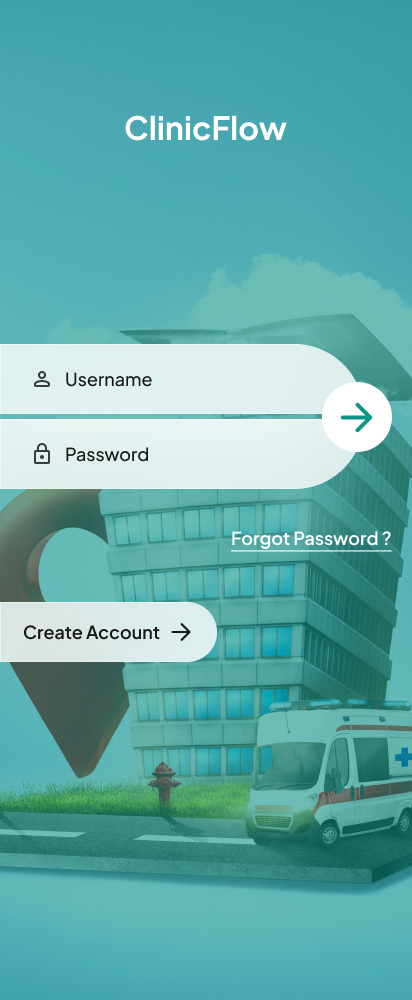
Clinic Booking App
Login and onboarding design for a clinic appointment booking app.
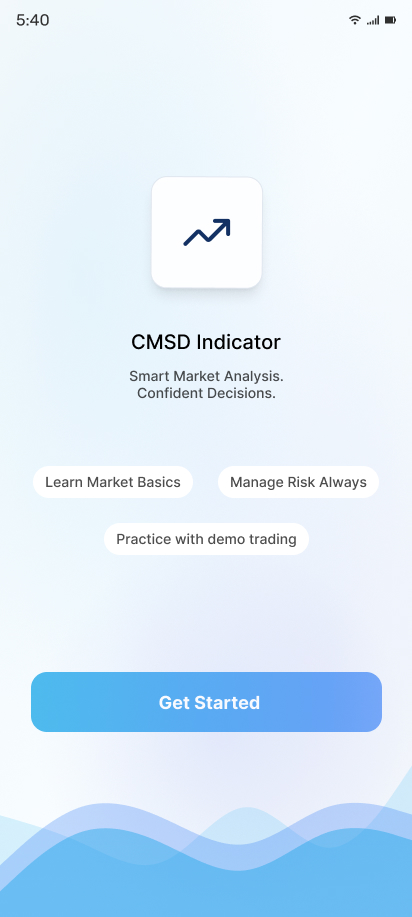
Market Analysis App
Onboarding design for a market analysis and trading indicator app.
What Our
Clients Say
Highest rated with an average 4.92 out of 5.00 from 13 reviews
"We received exceptional service for our website redesign and digital marketing campaign. The team's professionalism, technical expertise, and commitment to quality exceeded our expectations."
"Their web development expertise is impressive. The project was completed on schedule, and the after-sales support has been outstanding. We look forward to working with them again."
"The app development team was professional and supportive. They understood our business needs and delivered a reliable application with all the required features."
"Their digital marketing strategies helped us increase our online inquiries significantly. The team was knowledgeable, responsive, and transparent throughout the campaign."
"Their website development team built a fast, secure, and mobile-friendly website for our clinic. We have received many positive comments from our patients."
"Excellent service from start to finish. Their digital marketing efforts improved our search rankings and generated quality business leads within a few months."
Flexible App Development for Different Product Stages
MVP
Discovery, UX/UI, prioritized features, core development, integrations, testing, analytics, and launch preparation.
Business App
Custom workflows, user roles, integrations, notifications, analytics, testing, deployment, and support.
Enterprise App
Complex workflows, security requirements, enterprise integrations, scalable architecture, monitoring, and governance.
Modernization
Existing-app assessment, UX and architecture improvements, technology updates, performance work, testing, and deployment.
Dedicated Development
Ongoing product development, new features, maintenance, technical improvements, and release support.