Practical insights on web development, app development, UI/UX design and digital marketing from the LeafyWings Technology team.

DPDP Rules Website Checklist for Indian Small Businesses (Before May 2027)
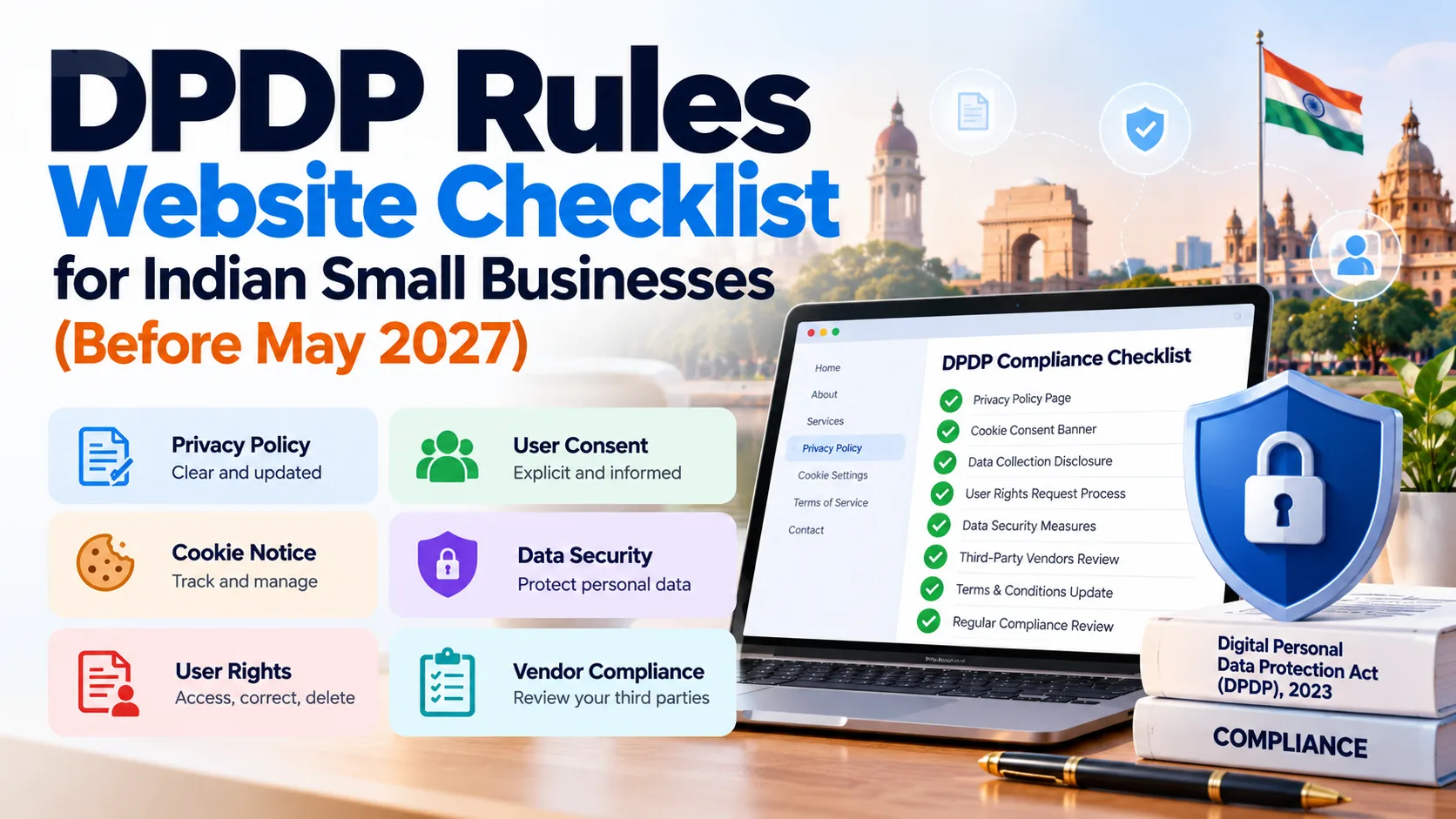
The Digital Personal Data Protection Act (DPDP Act) 2023 marks a significant shift in India's data privacy landscape. For small businesses, startups, and e-commerce ventures, understanding and implementing its requirements is not just a legal obligation but a crucial step towards building customer trust and avoiding hefty penalties. With the full implementation expected by May 2027, now is the time to ensure your website is fully compliant. This comprehensive dpdp compliance website checklist will guide you through the essential steps to prepare your online presence for the new era of data protection.
Understanding the DPDP Act and Its Impact on Your Website
The DPDP Act establishes a framework for processing digital personal data in India, granting individuals (Data Principals) greater control over their information and imposing strict responsibilities on entities (Data Fiduciaries) that collect and process it. If your business operates online, collects customer data through forms, cookies, or analytics, or processes transactions, then the DPDP Act directly impacts you. Your website is often the primary point of contact for data collection, making its compliance paramount.
Non-compliance isn't just a legal footnote; it can lead to substantial fines, reputational damage, and a loss of customer trust. Proactive compliance, however, positions your business as responsible and trustworthy, a valuable asset in today's digital economy.
Your Essential DPDP Compliance Website Checklist
Here’s a practical dpdp compliance website checklist to help Indian small businesses prepare their digital platforms:
- Updated and Accessible Privacy Policy: Your privacy policy must be clear, concise, and easily accessible from every page of your website. It needs to explicitly detail what data you collect, why you collect it, how it's used, who it's shared with, and how Data Principals can exercise their rights. Ensure it's written in plain language, avoiding legal jargon.
- Granular Consent Mechanisms: The Act mandates clear, affirmative consent for data processing. This means no pre-ticked boxes. Your website must allow users to provide specific consent for different types of data processing (e.g., marketing emails vs. order processing). Opt-in should be explicit and easily withdrawable.
- Data Collection Minimization: Review all data collection points on your website (forms, sign-ups, checkouts). Only collect personal data that is absolutely necessary for the specific purpose. Avoid asking for information you don't genuinely need.
- Defined Data Retention Policies: You must have a clear policy on how long you retain personal data. Data should only be kept for as long as necessary to fulfill the purpose for which it was collected, or as required by law. Implement automated deletion processes where possible.
- Robust Data Security Measures: Safeguarding personal data is critical. Ensure your website uses SSL/TLS encryption, strong authentication for administrative access, and regular security audits. Protect against unauthorized access, data breaches, and accidental loss.
- Facilitating Data Principal Rights: Your website should provide clear mechanisms for Data Principals to exercise their rights, including the right to access their data, correct inaccuracies, erase their data, and nominate another person to exercise their rights in case of death or incapacity.
- Transparency on Third-Party Data Sharing: If your website shares data with third-party services (analytics, advertising, payment gateways), your privacy policy must disclose this. Ensure these third parties are also DPDP compliant and have adequate data protection agreements in place.
- Cookie Consent Banner: Implement a clear cookie consent banner that informs users about the use of cookies, allows them to accept or reject different categories of cookies, and provides a link to your cookie policy.
- Data Breach Notification Plan: While not strictly a website feature, having a plan for identifying, assessing, and reporting data breaches to the Data Protection Board of India and affected Data Principals is crucial. Your website might be the first place a breach is detected.
Beyond the Checklist: Why Proactive Compliance Matters
Adhering to this dpdp compliance website checklist is more than just avoiding penalties; it's about building a foundation of trust with your customers. In an increasingly data-conscious world, businesses that prioritize privacy gain a significant competitive edge. It demonstrates integrity, professionalism, and a commitment to protecting your customers' most sensitive information. Proactive compliance can also streamline your internal data handling processes, making your business more efficient and secure in the long run.
How LeafyWings Technology Can Help You Achieve DPDP Compliance
Navigating the complexities of the DPDP Act and translating it into practical website changes can be daunting, especially for small businesses with limited resources. LeafyWings Technology specializes in developing and optimizing digital solutions that are not only user-friendly and effective but also fully compliant with evolving regulations. Our team can conduct a thorough audit of your existing website, identify compliance gaps, and implement the necessary technical and policy changes to ensure your online presence meets all DPDP requirements. From crafting compliant privacy policies and consent mechanisms to implementing robust security features, we are your trusted partner in achieving peace of mind before the May 2027 deadline.
Don't wait until the last minute to address DPDP compliance. Start preparing your website today to protect your business and build lasting customer trust. Contact LeafyWings Technology for a consultation to discuss your specific needs and how we can help you achieve full compliance.
Related posts
Blog Categories
Recent Posts
-

Website Development Cost in Chennai: Real Price Ranges...
October 20, 2026 -

Google Ads vs Facebook Ads
September 05, 2026 -

How to Create a WordPress Theme for 2024 : A Beginners...
March 02, 2025 -

Understanding CSS Positions: A Guide for Beginners in 2...
March 02, 2025 -

How to Create a Multisite Network WordPress Theme for 2...
February 23, 2025