Practical insights on web development, app development, UI/UX design and digital marketing from the LeafyWings Technology team.

Mobile App Development Cost in India: Flutter vs React Native vs Native
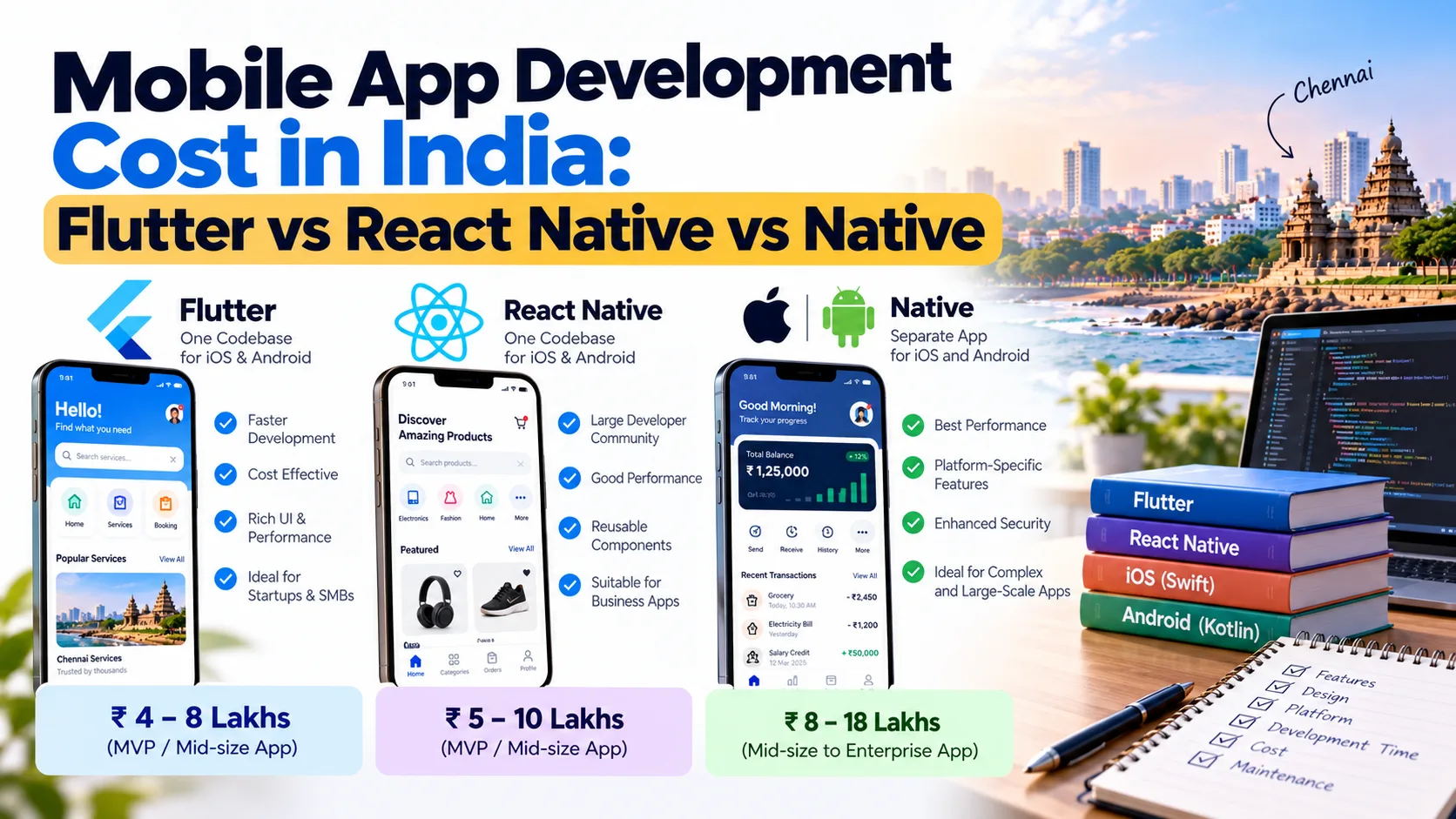
Embarking on a mobile app development journey is an exciting prospect for any business looking to expand its reach and improve customer engagement. However, one of the first and most critical questions that arises is, "What will it cost?" Understanding the app development cost in India, especially when comparing popular technologies like Flutter, React Native, and Native, is crucial for effective budget planning and project success. India has emerged as a global hub for software development, offering a unique blend of skilled talent and competitive pricing. This guide will demystify the factors influencing app costs and help you navigate the technological choices to make an informed decision for your business.
Key Factors Influencing App Development Cost in India
Before diving into specific technologies, it's essential to understand the universal elements that shape the final price tag of your mobile application. These factors are consistent regardless of the framework chosen, though they interact differently with each.
- App Complexity and Features: The more features your app has – user authentication, payment gateways, third-party integrations, real-time data processing, AI/ML capabilities – the more development time and resources it will require. A simple utility app will cost significantly less than a complex e-commerce platform or a social networking app.
- UI/UX Design: A stunning and intuitive user interface (UI) coupled with an excellent user experience (UX) is vital for app adoption. Custom designs, intricate animations, and multiple user flows demand more design effort, impacting the overall cost.
- Platform Choice: Developing an app for a single platform (iOS or Android) is generally less expensive than building for both. Cross-platform frameworks aim to mitigate this, but native approaches still incur separate development streams.
- Developer Experience and Location: The hourly rates of developers vary significantly based on their experience level (junior, mid-level, senior) and geographical location within India. While Indian developers offer competitive rates, top-tier agencies or highly specialized experts will command higher fees.
- Backend Infrastructure: Many apps require a robust backend for data storage, user management, and server-side logic. The complexity and scalability of this backend infrastructure contribute significantly to the total cost.
- Post-Launch Support and Maintenance: Apps need regular updates, bug fixes, performance monitoring, and security enhancements. This ongoing maintenance is a critical, often overlooked, part of the budget.
Flutter vs. React Native vs. Native: A Cost-Benefit Analysis
Each technology offers distinct advantages and disadvantages that directly impact development time, performance, and ultimately, the app development cost in India.
Native App Development Cost
Native apps are built specifically for a single platform using its native programming language (Swift/Objective-C for iOS, Kotlin/Java for Android). They offer the best performance, access to all device features, and the most seamless user experience.
- Pros: Superior performance and responsiveness, full access to device features, best security, excellent user experience.
- Cons: Requires separate codebases for iOS and Android, leading to longer development times and significantly higher costs if targeting both platforms. Maintenance and updates also need to be done twice.
- Cost Implications: Generally the most expensive option for dual-platform development. If you need a highly complex, performance-critical app with unique device integrations and only targeting one platform initially, native might be a strong contender.
Flutter App Development Cost
Developed by Google, Flutter is a UI toolkit for building natively compiled applications for mobile, web, and desktop from a single codebase. It's known for its fast development cycles and expressive UI.
- Pros: Single codebase for iOS and Android, fast development with "hot reload," excellent UI customization, near-native performance.
- Cons: Relatively newer, smaller developer community compared to native or React Native, larger app size.
- Cost Implications: Often more cost-effective than native for dual-platform apps due to code reusability. Development can be faster, translating to lower labor costs.
React Native App Development Cost
Backed by Facebook, React Native allows developers to build cross-platform mobile apps using JavaScript and the React framework. It compiles to native UI components, offering a native-like experience.
- Pros: Single codebase for iOS and Android, large and mature developer community (JavaScript expertise is common), good performance, extensive third-party libraries.
- Cons: Performance can sometimes be slightly less optimized than native, some native modules might be required for complex features, debugging can be challenging.
- Cost Implications: Similar to Flutter, React Native offers significant cost savings over native for cross-platform development due to code sharing and faster iteration.
Estimated App Development Cost in India: A Comparative Look
Providing exact figures is challenging without knowing the specific requirements, but we can offer general ranges for a medium-complexity app (e.g., a basic e-commerce app, a booking app, or a simple social media app) developed in India. These are broad estimates and can fluctuate based on features, design complexity, and developer rates.
- Native App (for a single platform, e.g., iOS OR Android): Starts from approximately ₹8,00,000 to ₹25,00,000+. For both platforms, this cost would effectively double or more.
- Flutter App (for both iOS and Android): Starts from approximately ₹6,00,000 to ₹18,00,000+.
- React Native App (for both iOS and Android): Starts from approximately ₹6,50,000 to ₹20,00,000+.
These figures highlight why cross-platform solutions like Flutter and React Native are often more attractive for businesses with budget constraints but need to reach both iOS and Android users. The competitive hourly rates of developers in India, typically ranging from ₹1,500 to ₹4,000 per hour (USD 20-50), make these technologies even more appealing compared to Western development costs.
Choosing the Right Technology for Your Business
The best technology for your app depends entirely on your business goals, budget, timeline, and target audience.
- If peak performance, platform-specific features, and an uncompromised user experience are paramount, and you have a substantial budget, Native development is ideal, especially if you're initially targeting only one platform.
- If you need to launch a high-performance, visually appealing app quickly on both iOS and Android with a shared codebase, Flutter is an excellent choice. It’s particularly strong for apps with custom UIs.
- If you have an existing web development team with JavaScript expertise and want to leverage that for mobile, or if you need a cost-effective way to build a robust app for both platforms with a large community backing, React Native is a strong contender.
Consider your long-term vision. Will your app require frequent updates? How important is absolute native look and feel versus a consistent cross-platform experience?
Understanding the intricacies of app development cost in India and the nuances of Flutter, React Native, and Native development can seem daunting. At LeafyWings Technology, we specialize in helping businesses like yours navigate these decisions. We offer expert consultation and development services tailored to your specific needs, ensuring you get a high-quality, cost-effective mobile application that drives success. Don't let the complexity stop you from realizing your app idea. Reach out to LeafyWings Technology today for a personalized quote and strategic guidance.
Related posts
Blog Categories
Recent Posts
-

DPDP Act for Clinics: A Patient Data Checklist Before M...
November 05, 2026 -
Google Ads vs Facebook Ads for Chennai Businesses
November 03, 2026 -
Clinic Management Software in Chennai: What It Costs an...
November 02, 2026 -

How to Choose a UI/UX Design Company in Chennai: 10 Que...
October 30, 2026 -

DPDP Rules Website Checklist for Indian Small Businesse...
October 27, 2026